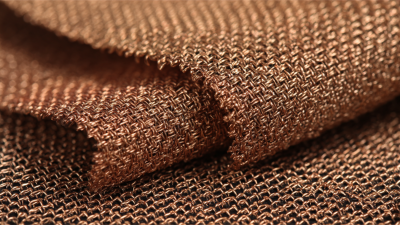
In the fast-changing world of tech, making devices run smoothly isn’t just a nice-to-have — it’s pretty much essential for manufacturers trying to keep up with what consumers want and meet all those tricky regulatory standards. One of the coolest innovations popping up recently is Copper Nickel EMI shielding cloth. This stuff isn’t just good at blocking electromagnetic interference (EMI), but it’s also super tough and flexible — making it a real game-changer. Industry insiders say that by 2025, the global market for EMI shielding materials could hit around $9.5 billion. That just shows how important strong shielding solutions are nowadays — whether you’re talking about consumer gadgets or aerospace tech.
Over here at SHIJIAZHUANG 3L TECHNOLOGY CO., LTD., we’ve been leading the charge in high-performance tech Textiles since 2009. We’re all about turning innovative materials into real-world solutions, and quality is always at the top of our list. When you get into the science behind Copper Nickel EMI Shielding Cloth, it’s pretty fascinating. Understanding what makes it special helps explain why it’s such a great pick for boosting device performance. With our knowledge and experience, we’re excited to see how this incredible material can help improve efficiency and reliability in all sorts of advanced tech applications.
Understanding the Basics of EMI Shielding and Its Importance in Device Performance
Electromagnetic interference, or EMI for short, is a pretty big deal when it comes to designing and making sure electronic devices work properly. As tech keeps pushing forward, gadgets are getting jam-packed with more tiny components than ever before, which sadly makes them more vulnerable to interference. I remember reading in a report by the International Electrotechnical Commission (IEC) that almost 80% of device failures can actually be traced back to EMI problems—wow, that’s a lot! That really highlights just how crucial good EMI shielding is to keep devices reliable and functioning smoothly.
Lately, copper nickel EMI shielding cloth has been gaining attention as a solid solution for fighting off these electromagnetic disruptions. It’s not just a barrier that blocks unwanted waves—it’s also super conductive and resistant to corrosion, which is a huge plus. There was this study in the Journal of Materials Science that found copper nickel alloys can reach shielding effectiveness over 100 dB at certain frequencies. That’s a pretty significant reduction in interference, honestly. As devices get smaller, sleeker, and more complex, using high-performance shielding materials like copper nickel cloth becomes pretty much essential—helping keep everything running smoothly and making the user experience way better, whether you’re talking about your everyday gadgets or high-tech military gear.
The Unique Properties of Copper Nickel Materials in EMI Shielding Applications
Copper-nickel materials are pretty amazing when it comes to blocking out electromagnetic interference (EMI). Their unique combo — with copper’s fantastic electrical conductivity and nickel’s resistance to corrosion — really works well together, boosting the overall performance of EMI shielding fabrics. Not only does this blend help keep out those pesky electromagnetic waves, but it’s also durable enough to handle various industrial applications. It’s no wonder they’re such popular contenders!
Lately, there’s been some exciting progress in EMI shielding tech, with new stuff like electrospun composites and metalized textiles entering the scene. These innovations make materials lighter, more flexible, and perform better — which is super important for sectors like telecom, aviation, and healthcare. The advancements in shielding solutions, especially with copper-nickel fabrics, really highlight their ability to meet different needs while still delivering top-notch performance. Overall, they’re playing a key role in modern tech stuff, no doubt about it.
Steps to Choose the Right Copper Nickel EMI Shielding Cloth for Your Device
So, when you're trying to pick the right copper-nickel EMI shielding cloth for your device, there are a few important things to keep in mind. First off, think about the frequency range of the electromagnetic interference (EMI) your device is gonna face. I read a report from the IEC (International Electrotechnical Commission) recently, and they mention that for most consumer electronics, you want a material that can handle a wide range—like from about 30 MHz up to 18 GHz. Copper-nickel alloys are pretty great here because they have excellent conductivity and resist corrosion, so they do a solid job of keeping signals clear without much loss.
On top of that, it’s smart to consider what kind of environment your device is gonna be used in. A study by the EIA (Electronics Industry Association) points out that things like durability and flexibility really matter in real-world situations. For example, if your device’s gonna get some mechanical stress or be used outdoors in tougher conditions, choosing a copper-nickel cloth with extra reinforcement or a layered design could really boost its lifespan and shielding power. And don’t forget to think about the weight and thickness of your shielding material—those little details can make a big difference in how your device performs and how comfortable it feels to use.
Installation Tips for Maximizing the Effectiveness of EMI Shielding Cloth
 When you're installing copper-nickel EMI shielding cloth, it’s really important to start off with good prep work to get the best results. First off, make sure the surface you're sticking it to is all clean—no dust, grease, or anything that might mess up the adhesion. A smooth, well-prepped surface helps the cloth stick better, making for a tighter seal and better contact with your device. Oh, and don’t forget to think about the environment too—things like how hot or humid it is can impact how well the adhesive works. So, try to pick a good time when conditions are just right.
Once that's sorted, take your time measuring and cutting the cloth. Getting the dimensions right is key—cover all the areas that need shielding, because any gaps can let EMI sneak in. When you're applying the cloth, be gentle—don't stretch it too much, as that can mess with its shielding ability. And finally, make sure you secure the edges properly, maybe with some conductive tape or adhesive, to make sure everything's sealed up tight. Paying attention to these little details during installation really pays off—it boosts how well the shielding works and keeps your devices safe and sound.
Measuring and Testing Device Performance Improvements with Copper Nickel Shielding
Copper-nickel EMI shielding cloth is really starting to become a game-changer when it comes to improving device performance, especially in settings where electromagnetic interference (EMI) is a real concern. Basically, by cutting down the interference, this stuff helps your electronic gadgets run smoother, more reliably, and more efficiently. You can actually see how well it works by doing some systematic testing—checking things like signal clarity, noise levels, and overall stability of the device.
If you want to get the best results with copper-nickel shielding, it’s important to measure everything carefully before and after you apply the shield. Start by noting your device’s baseline performance—things like data transfer speeds and error rates. After you add the shielding, run the same tests again and compare the results. That’ll give you a pretty good idea of how much of a difference the shielding has made, and it can point you in the right direction for any tweaks you might want to make.
Some tips? Make sure your testing environment stays consistent, and use calibrated equipment to get accurate data. It’s also a good idea to try different thicknesses and configurations of the shield to see what works best for your specific setup. Keep checking your device’s performance over time, and don’t be afraid to fine-tune things—it’s all about finding that sweet spot to get the best possible performance from your device.
Future Trends in EMI Shielding Technology: Innovations in Material Science
As electronic devices keep getting smaller and more common, the need for good EMI shielding has never been more important. You know, the stuff that helps keep gadgets from interfering with each other. Thanks to some cool breakthroughs in materials science, we're now seeing more advanced shielding options popping up — especially using copper-nickel mixes. I recently read in a report from MarketsandMarkets that the global market for EMI shielding is expected to hit around $8 billion by 2025. A big chunk of that growth is from new materials that do the job better while keeping things lightweight.
One trend that's catching on is the move toward multi-purpose shielding materials. These aren’t just about blocking interference anymore — they’re also designed to look good and add strength to the device’s structure. Researchers are playing around with hybrid materials, mixing traditional metals with cutting-edge polymers, which gives you flexibility without sacrificing durability. For instance, recent studies have shown that fabrics made from copper-nickel can block up to 70 dB of interference, making them perfect for high-frequency stuff like 5G.
**Tip:** When you're choosing EMI shielding materials, think about the specific interference frequencies you're dealing with and how much attenuation you really need. Also, stay updated on new material tech — it can really make a difference in how your gadgets perform and last. Keeping an eye on upcoming innovations can help you pick the best options for your next electronic project.
Maximizing Device Performance: Copper Nickel EMI Shielding Effectiveness
This bar chart illustrates the shielding effectiveness of different materials used in EMI shielding. Copper and Copper-Nickel composites show significantly higher shielding effectiveness compared to materials like Aluminum, Steel, and Plastic. Innovations in material science, especially in the development of advanced alloys, are expected to enhance performance further in future trends.
Exploring the Benefits and Applications of Anti Bacterial Copper Conductive Fiber Yarn in Modern Textiles
The innovative development of anti-bacterial copper conductive fiber yarn is revolutionizing the textile industry. At its core, this advanced material combines nylon and a copper alloy, achieved through a sophisticated multi-rake magnetron vacuum sputtering process. This technique results in a robust composite that not only offers excellent conductivity but also features a durable oxidation-resistant film. This film enhances the yarn's performance, making it not only soft and flexible but also capable of withstanding repeated washing—a crucial attribute for modern textiles.
As the demand for antibacterial and conductive textiles escalates across various sectors, including healthcare, fashion, and sportswear, copper conductive fiber yarn stands out as a versatile solution. Its inherent antibacterial properties make it particularly suitable for medical applications, where hygiene is paramount, while its conductivity and super antistatic characteristics make it ideal for smart textiles—integrating technology with everyday wear. The adaptability and resilience of this material ensure that it can meet the diverse needs of industries aiming to incorporate cutting-edge technology into their products, paving the way for innovative applications that enhance both functionality and user experience.
FAQS
: Proper surface preparation is essential as it ensures the surface is clean and free of dust or grease, which enhances the adhesive properties of the cloth, allowing for a tighter seal and better contact with the device.
It's important to consider the environmental factors such as temperature and humidity, and choose a time when conditions are optimal for installation to improve adhesion.
Ensure that the dimensions are precise to cover all relevant areas that require shielding. Gaps can lead to increased electromagnetic interference (EMI), so accurate measuring and cutting are crucial.
Avoid stretching the cloth too much during application, as this can compromise its shielding properties.
The effectiveness can be quantitatively assessed by conducting systematic testing before and after application, focusing on parameters like signal integrity, noise reduction, and overall device stability.
Evaluating baseline performance with critical specifications such as transmission rates and error rates before and after applying the shielding will provide insights into improvements.
Ensure that the testing environments remain consistent and use calibrated equipment for accurate measurements to compare performance effectively.
Experimenting with different thicknesses and configurations of the cloth can help identify the most effective setup for your specific application, maximizing the shielding effect.
Regular assessments and adjustments based on performance metrics help in fine-tuning the shielding effect and maximizing device efficiency over time.
It is advisable to use conductive adhesive or tape to secure the edges firmly and ensure a complete seal for better performance.
Conclusion
So, I was reading about